Top Auto Repair Shops Serving Seattle, WA
Welcome to your local autorepair directory in Seattle, WA. Find trusted professionals in your area.
Map of Businesses in Seattle
All Listings in Seattle
11 businesses
AutoLogic Inc.
Auto repair shop
Bay's Auto Repair & Collision Services
Auto repair shop
Repair Revolution
Auto repair shop
The Garage In Renton
Auto repair shop
34th STREET GARAGE SEATTLE
Auto repair shop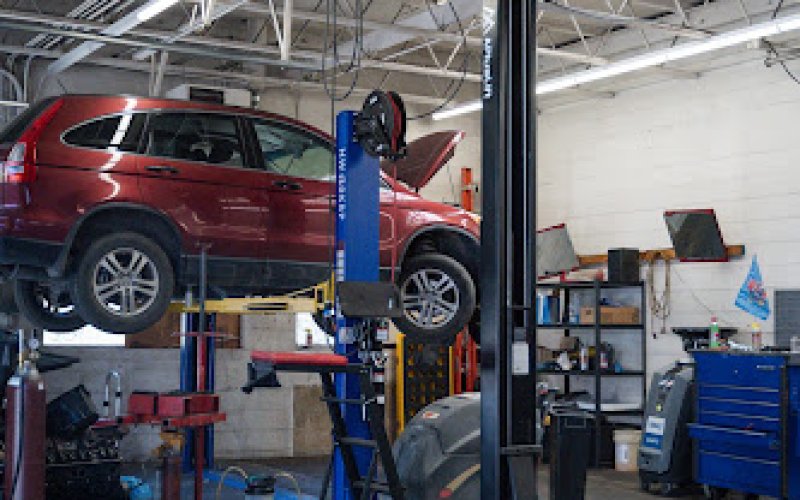
Budd & Company Automotive - Rainier Ave
Auto repair shop
Mose Auto
Auto repair shop
Your Family Auto
Auto repair shop
A&M Auto Repair Bellevue
Auto repair shop
Auburn Foreign and Domestic Auto Repair
Auto repair shop
High Road Automotive
Auto repair shopAbout autorepair in Seattle
Here's a number that stopped me mid-coffee at Cafe Ladro on 15th: the average Seattle driver now spends $1,247 a year on vehicle maintenance and repair, according to recent regional auto industry surveys—about 18% higher than the national average. And it's not because Seattle drivers are careless. It's because our cars take a beating that drivers in Phoenix or Dallas never deal with: nine months of rain, pothole-riddled streets after every hard freeze, and a whole lot of stop-and-go on I-5 that chews through brakes faster than anywhere else in the Pacific Northwest.
The repair market here has ballooned alongside population growth—King County added roughly 1.3% more residents last year, pushing the metro area past 2.3 million. That means more cars, more commuters grinding through Ballard Bridge traffic, and more wear-and-tear repair visits. There are somewhere around 340 independent auto repair shops operating within Seattle city limits alone (not counting dealership service centers), per state business licensing data, and that number's held steady even as rents in neighborhoods like Fremont and Georgetown have pushed some shops toward Tukwila and Renton.
Who's actually bringing their car in? It's a mixed bag—but skews toward two groups: longtime homeowners in areas like Ballard and Wallingford holding onto older, paid-off vehicles (because why buy new when gas prices and insurance already hurt), and younger renters in Capitol Hill or South Lake Union driving used Hondas and Subarus they bought secondhand. Tech workers with company cars are rare here; this isn't LA. Most of Seattle's repair business is unglamorous, recurring, and driven by necessity—brake pads, timing belts, and the dreaded check-engine light.
Ballard
- Area Profile: Mix of old-timer homeowners and younger families who moved in over the last decade; median household income around $112,000.
- autorepair Activity: Heavy demand for suspension work—those brick streets near Ballard Ave are rough on shocks. Also a lot of pre-purchase inspections since so many residents buy used from Craigslist or Facebook Marketplace.
- Price Range: $85-$150/hour labor rate, slightly above city average.
- Local Note: Several shops here specialize in Subarus and Volvos—makes sense, given how many of both you'll spot parked along NW Market Street.
Rainier Valley
- Area Profile: One of the most diverse zip codes in the state; working-class families, lots of multi-generational households.
- autorepair Activity: High volume of older vehicle repairs—think 2005-2012 Toyota Camrys and Honda Civics running well past 150K miles. Practical fixes, not upsells.
- Price Range: $60-$95/hour—some of the most affordable labor rates in the city.
- Local Note: Old-timers here know which shops will work with you on payment plans. That kind of trust takes years to build, and newcomers often miss it entirely.
Capitol Hill
- Area Profile: Younger, renter-heavy, lots of first-generation car owners in their 20s and 30s.
- autorepair Activity: Smaller jobs dominate—oil changes, battery replacements, the occasional "why is my car making that noise" diagnostic visit.
- Price Range: $90-$140/hour; convenience often outweighs price sensitivity here.
- Local Note: Parking is so bad that some shops offer pickup/drop-off service just to compete—a detail you won't see advertised much outside this neighborhood.
📊 Current Price Points:
- Budget options: $250-$500 (basic services—oil changes, brake pads, minor diagnostics)
- Mid-range: $500-$1,500 (most popular segment—timing belts, alternators, moderate suspension work)
- Premium: $1,500+ (transmission rebuilds, engine replacement, EV battery diagnostics)
📈 Market Trends: Demand is up roughly 9% year-over-year, driven partly by people holding onto vehicles longer (average car age in King County is now 12.1 years, up from 10.8 in 2019). Parts costs have climbed too—supply chain hiccups still linger for certain imports, pushing repair estimates up 6-11% depending on the make. Labor rates have crept upward almost everywhere, and shops in Ballard and Capitol Hill in particular have raised prices to offset commercial rent increases.
Seasonally, expect a surge every October and November—that's when Seattle's first cold snap exposes battery and heating system problems people ignored all summer. Average turnaround time for a standard repair sits around 2-4 business days, though anything requiring a specialty part (foreign makes especially) can stretch to a week or more.
💰 What People Are Spending:
- Brake service — average $380
- Check engine diagnostics + fix — average $610
- Timing belt/water pump replacement — average $890
- Suspension repair — average $720
- Transmission service — average $1,650
Economic Indicators: Seattle's population continues growing at roughly 1.2-1.4% annually, with median household income at $110,842 citywide—well above the Washington state average of $87,200. Amazon, Microsoft, and the University of Washington remain the dominant employment anchors, and ongoing development around South Lake Union and the Denny Triangle keeps adding both residents and commuter traffic.
Local Market Dynamics: More commuters means more miles on more vehicles, which is basically rocket fuel for the repair industry. Competition is fragmented—no single chain dominates the way, say, a national franchise might in a smaller metro. Independent shops still control probably 70% of the market, with dealership service centers and a handful of regional chains (like Les Schwab for tires) picking up the rest.
How This Affects Buyers/Customers: If you're driving a 2015 Honda CR-V in Wallingford, you're paying noticeably more for labor than someone in Rainier Valley with the identical car—purely because of neighborhood rent economics bleeding into shop pricing. I've seen this play out repeatedly: same repair, same part, $40-$60 difference in labor cost depending on zip code.
- ☀️ Spring/Summer: Moderate demand, good time for non-urgent maintenance—shops aren't slammed yet.
- 🍂 Fall: Demand spikes as people prep for wet weather—brake and battery checks surge in September/October.
- ❄️ Winter: Highest volume of emergency repairs (dead batteries, heater failures); expect longer wait times, less room to negotiate.
- 📅 Peak months: November and December are the worst for scheduling flexibility—book early or wait.
Timing Tips for Seattle: Late summer (August) tends to be the slowest period for shops, meaning better odds of getting same-day appointments and occasionally softer pricing on non-urgent work. Tax season (Feb-April) can be tight for household budgets, so shops sometimes offer promotions to keep bays full.
Smart Timing Tips:
- ✓ Schedule routine maintenance in August or early September, before the fall rush
- ✓ Avoid emergency repairs in December if you can—prices and wait times both spike
- ✓ Ask about off-peak scheduling discounts; some Georgetown shops offer them quietly
- ✓ Get pre-winter inspections in October, before the first freeze exposes problems
Credentials to Verify: Look for ASE (Automotive Service Excellence) certification—it's the industry gold standard nationally, and reputable Seattle shops display it prominently. In Washington, auto repair businesses must be registered with the WA Department of Licensing, and shops should be able to provide a valid UBI (Unified Business Identifier) number on request. Membership in the Automotive Service Association or local chamber affiliations is a decent secondary signal, though not required.
Questions to Ask: How long has the shop operated in Seattle specifically? Can they provide two or three local references? Will they give a written estimate before starting work, and do they call before exceeding it?
⚠️ Red Flags Specific to Seattle autorepair:
- Quotes that balloon significantly once the car's already on the lift ("we found more problems")
- Shops with no fixed address, operating out of shared industrial space with vague signage
- Pressure to authorize repairs same-day, no time to get a second opinion
- Suspiciously glowing reviews all posted within the same week or month
Where to Check Complaints: Washington's Attorney General Consumer Protection division tracks auto repair complaints statewide. The Better Business Bureau's Western Washington chapter is also useful. On Google and Yelp, watch for shops with a cluster of 1-star reviews describing the exact same bait-and-switch pattern—that's rarely a coincidence.
✓ Established presence in Seattle (not just passing through)
✓ Verifiable local reviews and references
✓ Transparent pricing, no hidden fees
✓ Clear process explained upfront
✓ Responsive communication
Check Reviews & Ratings
We recommend verifying businesses through trusted review platforms before making a decision.
Frequently Asked Questions
Popular Categories in Seattle
Explore Other Cities
🔨 Contractors near Seattle
Professional Categories in Seattle, WA
Related Services from Similar Professionals