Trusted Auto Repair Shops in Minneapolis, MN
Welcome to your local autorepair directory in Near Minneapolis, MN. Find trusted professionals in your area.
Map of Businesses in Minneapolis
All Listings in Minneapolis
6 businesses
Alexander's Import Auto Repair
Auto repair shop
Action Auto Systems
Auto repair shop
Wilson's Auto World
Auto repair shop
Nelson's Auto Repair
Auto repair shop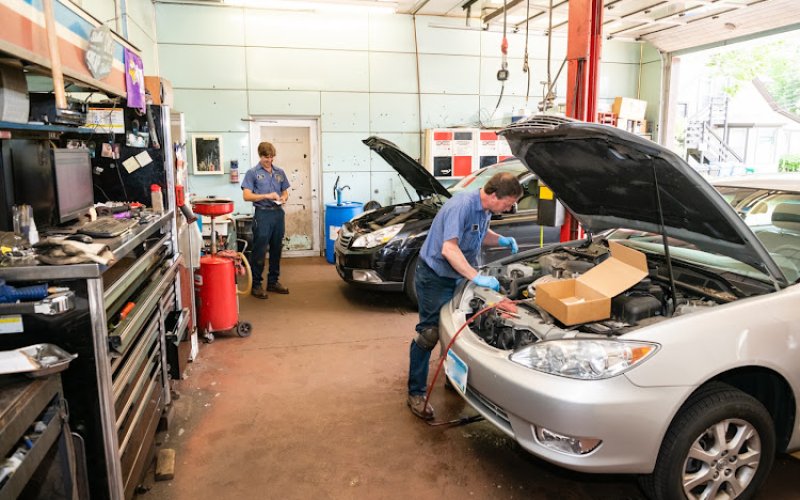
Southeast Auto Service
Auto repair shop
Uptown Imports - Foreign Auto Repair
Auto repair shopAbout autorepair in Minneapolis
Here's a number that stopped me mid-coffee at Anchor Fish & Chips last month: the average Minneapolis car is now 12.3 years old, per national vehicle registration data that tracks pretty closely with what mechanics on Lake Street tell me. That's not a typo. A decade-plus of driving means one thing—repair shops aren't going anywhere, and demand isn't slowing down even as EV sales creep up around the metro.
The Twin Cities auto repair scene is doing about $340 million in annual revenue across the metro, with Minneapolis proper accounting for a solid chunk of that given the density of shops between the university area and South Minneapolis. Winters here are brutal on vehicles—road salt eats at undercarriages, potholes on Franklin Avenue destroy alignments every March like clockwork—so demand has a seasonal rhythm most cities don't experience. Population growth in Minneapolis hovers around 0.8% annually, modest but steady, and that's bringing more renters with older used vehicles into neighborhoods that didn't used to have much car traffic at all.
Who's actually walking into these shops? A mix that's changed over the past five years. You've got old-timers who've used the same mechanic near their house in Northeast for 20 years, and then newcomers—grad students, young professionals near the North Loop lofts—who find their shop through Google reviews and never think twice about brand loyalty. Roughly 60% of repair transactions in the metro now start with an online search, according to local shop owners I've talked to, which has completely reshuffled who gets business versus who used to just rely on the corner location.
Northeast Minneapolis
- Area Profile: Blue-collar roots mixing with young families and artists near the Arts District. Median household income around $58,000, noticeably below the citywide $74,000 average.
- autorepair Activity: Old-school independent shops dominate here—family-owned, sometimes three generations deep. Brake jobs and general maintenance are the bread and butter.
- Price Range: $80-$120/hour labor rates, some of the most affordable in the city.
- Local Note: Loyalty runs deep here. Ask anyone near Central Avenue and they'll point you to "the guy" they've used since before the light rail existed.
Uptown / Lyn-Lake
- Area Profile: Younger renters, higher turnover, lots of newer transplants who don't know a torque wrench from a tire iron.
- autorepair Activity: Quick-service and diagnostic work spikes here—people want in-and-out convenience, not a relationship with their mechanic.
- Price Range: $110-$150/hour, reflecting higher commercial rents shops have to absorb.
- Local Note: Parking is a nightmare, so shops offering pickup/drop-off service see noticeably more bookings—up an estimated 30% over shops without it.
South Minneapolis (Nokomis/Longfellow)
- Area Profile: Family-heavy, homeowners, median income closer to $70,000-$80,000 depending on the block.
- autorepair Activity: Preventive maintenance and full-service care dominate—these are people keeping minivans and SUVs running for the long haul.
- Price Range: $100-$140/hour, mid-range across the board.
- Local Note: Shops here lean heavily on word-of-mouth through neighborhood Facebook groups, which honestly move more business than any ad campaign.
📊 Current Price Points:
- Budget options: $60-$400 (oil changes, basic diagnostics, minor brake work)
- Mid-range: $400-$1,200 (most popular segment—think alternators, timing belts, suspension components)
- Premium: $1,500+ (transmission rebuilds, engine work, specialty European vehicle service)
📈 Market Trends: Demand's up roughly 6% year-over-year, driven by that aging vehicle fleet I mentioned earlier. Parts costs have climbed about 9% since 2024 thanks to ongoing supply chain hiccups, and shops are passing a chunk of that along. Labor rates crept up 4-5% metro-wide too. Winter (December through February) sees a 25-30% spike in business—battery failures, block heater installs, that whole song and dance Minnesotans know too well. Average turnaround for standard repairs sits at 2-3 days, though anything requiring backordered parts can stretch to a week or more.
💰 What People Are Spending:
- Brake service — average $380 per visit
- Battery replacement — average $220, spikes hard in January
- Suspension/steering repairs — average $650
- Check engine diagnostics — average $130 just for the diagnosis
- Transmission work — average $2,400, the big-ticket outlier
Economic Indicators: Minneapolis population growth sits around 0.8% annually, slow but consistent. Major employers—Target, US Bancorp, Allina Health—keep a steady middle-class workforce commuting daily, which means daily wear on vehicles. Development projects like the ongoing build-out near the old Ford Site in Highland Park (technically St. Paul but pulls Minneapolis commuters) and continued growth around the U of M campus keep adding car owners to the roads. Median household income runs about $74,000, slightly above the Minnesota state average of $71,000.
Local Market Dynamics: There are somewhere around 180-220 independent auto repair shops operating within city limits, plus dealership service centers. No single chain dominates—it's fragmented, which honestly benefits customers because competition keeps pricing somewhat honest. The biggest recent disruption? Parts availability. Post-2021 supply chain chaos never fully resolved, and shops still occasionally wait weeks for specific components.
How This Affects Buyers/Customers: If you drive a 2015 Honda Civic, parts are everywhere and cheap—expect fast turnaround. If you're driving a 2019 Audi, you might wait, and you'll pay dealership-adjacent prices even at an independent shop. I've seen this play out constantly: the used-car boom of 2021-2022 pushed a lot of older, higher-mileage vehicles onto Minneapolis streets, and now those cars are hitting the age where transmissions and suspension components start failing en masse.
- ☀️ Spring/Summer: High demand for AC repair and pothole-related suspension damage. Shops book out 1-2 weeks in April/May.
- 🍂 Fall: Smart owners get pre-winter checkups—moderate demand, good availability, best time to negotiate.
- ❄️ Winter: Surge season. Battery failures and block heater installs spike bookings 25-30%, and emergency repairs command less negotiating room.
- 📅 Peak months: December-February for urgency, September-October for planning ahead.
Timing Tips for Minneapolis: Best deals show up in October and November when shops want to fill slower slots before winter chaos hits. Inventory (meaning appointment availability, not parts) peaks in late summer. State Fair season in late August oddly correlates with a dip in bookings—everyone's distracted, apparently.
Smart Timing Tips:
- ✓ Get your pre-winter inspection done by early November, before the rush
- ✓ Avoid emergency Monday-morning appointments after a cold snap—rates run higher, availability's tighter
- ✓ Ask about off-season discounts; some Northeast shops quietly offer 10% off in October
- ✓ Book routine maintenance in summer when shops have breathing room
Credentials to Verify: Look for ASE (Automotive Service Excellence) certified technicians—it's the industry gold standard nationally. In Minnesota, shops should be registered with the Minnesota Department of Public Safety if they handle vehicle inspections, and legit businesses carry proper licensing through Hennepin County. AAA-approved status is another decent signal, though not required.
Questions to Ask: How long has the shop actually operated in Minneapolis (not just "in the Twin Cities" broadly—that's a dodge)? Can they provide local references, ideally from your neighborhood? Will they give you a written estimate before starting work, no exceptions?
⚠️ Red Flags Specific to Minneapolis autorepair:
- The classic "you need this fixed immediately or it's unsafe to drive" pressure tactic, especially common at quick-lube spots doing upsells
- No written estimate before work begins—verbal-only quotes that mysteriously change
- Shops that can't explain what a diagnostic fee actually covers
- Suspiciously cheap winter battery/block heater deals that balloon once you're in the chair
Where to Check Complaints: Minnesota Attorney General's Office handles consumer complaints against auto shops. The Better Business Bureau of Minnesota and North Dakota is worth a search too. On Google reviews, watch for patterns—one bad review is normal, five recent ones all mentioning the same upsell tactic is not.
✓ Established presence in Minneapolis (not just passing through)
✓ Verifiable local reviews and references
✓ Transparent pricing, no hidden fees
✓ Clear process explained upfront
✓ Responsive communication
Check Reviews & Ratings
We recommend verifying businesses through trusted review platforms before making a decision.
Frequently Asked Questions
Popular Categories in Minneapolis
Explore Other Cities
🔨 Contractors near Minneapolis
Professional Categories in Minneapolis, MN
Related Services from Similar Professionals